1930s through World War II
The Clark Family’s Ruin
[Jake Clark](entity:character-recall-character-jake-clark-04c068a46dc0) grew up expecting wealth and status, but the [Great Depression](entity:time-recall-time-ce283107ccf3) erased his family’s land and left him with debts. He met [Julienne Maria Jacques](entity:character-recall-character-julienne-maria-jacq-2380cc9673a0) in New Orleans, won her with stories of a grand future, and married her in 1933.
After World War II
The Family Moves to the Marsh
After the war, Jake returned to [North Carolina](entity:location-recall-location-7dab908d4fe3) with a damaged leg and disability checks, but also with the shame of his wartime conduct and a deepening reliance on alcohol. He brought Julienne and their children to the family’s neglected fishing shack, promising to repair it and start over.
October 10, 1945
Kya’s Birth
Catherine Danielle Clark was born the youngest of five children and became known as [Kya](entity:character-recall-character-kya-4aa1081e0d89). Her life began in a family already worn down by poverty, isolation, and Jake’s drinking, though Julienne tried to make a home through cooking, gardening, and care for the children.
Summer 1952
Ma Walks Away
When [Kya](entity:character-recall-character-kya-4aa1081e0d89) was six, she watched her mother walk down the sandy lane carrying a blue case and wearing her going-out shoes. Kya expected Julienne to return, while [Jodie](entity:character-recall-character-jodie-1ce458d6c1b4) tried to reassure her, but her mother disappeared into the woods without looking back.
Weeks after Ma’s departure in 1952
The Older Children Leave
One by one, [Kya](entity:character-recall-character-kya-4aa1081e0d89)’s older siblings left the shack, fleeing the violence and volatility that had shaped their childhood. Their departures followed their mother’s example, but none of them took Kya with them; only the small pile of socks her sisters left behind testified to their former presence.
Late 1952
Jodie Leaves Kya
After Jake struck him, [Jodie](entity:character-recall-character-jodie-1ce458d6c1b4) told [Kya](entity:character-recall-character-kya-4aa1081e0d89) he could not stay any longer. He warned her to avoid the house if danger came, hide deep in the marsh, and cover her tracks, then walked away while she watched from the beach.
Days after Jodie leaves in 1952
Pa Burns Ma’s Belongings
Jake returned and burned Julienne’s paintings, dresses, books, and radio in a bonfire. [Kya](entity:character-recall-character-kya-4aa1081e0d89) tried to save them but could not get close enough through the heat; watching the artwork disappear destroyed one of her last tangible links to her mother.
Late 1952
Kya Learns to Fend for Herself
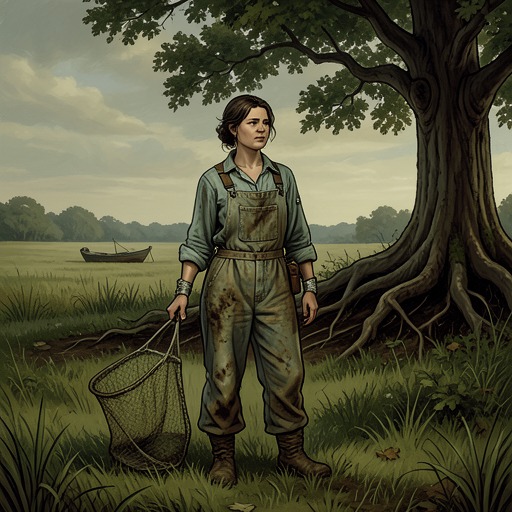
When Jake was absent for days, [Kya](entity:character-recall-character-kya-4aa1081e0d89) fed herself from the garden, tended the shack, and slept on a mattress on the porch, close to the marsh. She learned to keep out of her father’s way, living between brief periods of danger and long stretches of solitude.
1952
The First Trip to Town
With Jake’s money, [Kya](entity:character-recall-character-kya-4aa1081e0d89) walked alone to [Barkley Cove](entity:location-recall-location-barkley-cove-9d21a90886e7) to buy grits, uncertain how to manage the coins or speak to the shopkeeper. At the store, Chase blamed her for getting in the way of his bicycle, and Miss Pansy called her swamp trash, making the village’s contempt plain.
Autumn 1952
Kya’s First Day at School
A truant officer arrived at the shack and persuaded [Kya](entity:character-recall-character-kya-4aa1081e0d89) to attend school by promising a hot lunch. In class, she was made to spell dog, said the letters backward, and was laughed at by the other children; she still leaned forward, eager to learn.
The day after her first day of school in 1952
Kya Runs from School
The children mocked [Kya](entity:character-recall-character-kya-4aa1081e0d89) on the bus and called her a marsh hen and swamp rat. She fled back into the marsh and used the tracks [Jodie](entity:character-recall-character-jodie-1ce458d6c1b4) had taught her to confuse the truant officers, who eventually stopped searching; she never returned to school.
Autumn 1952
The Rusty Nail
After stepping on a rusty nail in the tree fort, [Kya](entity:character-recall-character-kya-4aa1081e0d89) feared lockjaw and had no adult to take her for medical care. She soaked her foot in brackish water and mud, watched herself for symptoms, and recovered without help, a frightening early demonstration of how completely she was on her own.
Winter 1952
The Marsh Becomes Her Mother
As the seasons passed, the land sheltered [Kya](entity:character-recall-character-kya-4aa1081e0d89) and drew her deeper into its rhythms. Her grief did not vanish, but it settled beneath her daily life, and the marsh became the closest thing she had to a mother.
1952
Kya Takes the Boat Alone
When Jake left for Asheville, [Kya](entity:character-recall-character-kya-4aa1081e0d89) took his boat through channels she had only traveled with [Jodie](entity:character-recall-character-jodie-1ce458d6c1b4). She lost her way as a storm approached and, frightened and low on fuel, searched for a familiar face in the waterways.
1952
Tate Guides Kya Home
[Kya](entity:character-recall-character-kya-4aa1081e0d89) found [Tate](entity:character-recall-character-tate-e4fe51a5c8b8) fishing in the estuary and admitted that she was lost. He calmly led her through the correct channels and stayed with her until she reached her lagoon; knowing her name and helping without frightening her made him the first new person she could trust.
Late 1952
Pa and Kya Reconnect
[Kya](entity:character-recall-character-kya-4aa1081e0d89) cleaned the shack and cooked a meal in the hope of persuading Jake to let her use the boat. He surprised her by taking her fishing instead, teaching her about the marsh and sharing a rare stretch of calm companionship.
1953
The First Welcome at Jumpin’s
Jake took [Kya](entity:character-recall-character-kya-4aa1081e0d89) to Jumpin’s wharf and then to the [Barkley Cove Diner](entity:location-recall-location-eacf6b089368), where townspeople stared at them and a mother pulled her little girl away from Kya as if she were dirty. The encounter showed Kya how thoroughly the village excluded her, while [Jumpin’](entity:character-recall-character-jumpin-b821fbd3c84f) greeted her with uncomplicated warmth.
1953
Pa Burns Ma’s Letter
A blue envelope arrived in Julienne’s handwriting, giving [Kya](entity:character-recall-character-kya-4aa1081e0d89) her first sign that her mother was alive. Jake took the letter and burned it before Kya could read it, leaving her only ashes and a renewed fear that Julienne would never return.
Winter 1956
Pa Disappears
Jake stopped coming home, and [Kya](entity:character-recall-character-kya-4aa1081e0d89) finally accepted that he might be gone for good. With no Monday money, little food, and no kerosene, she considered turning herself in, but could not bring herself to leave the shack, the birds, and the marsh.
Winter 1956
Kya Makes a Living from Mussels
[Kya](entity:character-recall-character-kya-4aa1081e0d89) dug mussels through the night and sold them to [Jumpin’](entity:character-recall-character-jumpin-b821fbd3c84f) for cash and fuel. When other pickers beat her to the shop’s quota, she tried smoking fish; Jumpin’ and [Mabel](entity:character-recall-character-mabel-a2367855b656) arranged a trade that brought her clothes, food, and basic supplies without making her accept charity.
1960
Kya and Tate Exchange Feathers
At fourteen, [Kya](entity:character-recall-character-kya-4aa1081e0d89) found a rare heron feather placed on a stump in the oak clearing, then returned to find more gifts, seeds, and a spark plug. She left a feather of her own in exchange, and the silent ritual became a careful bridge between her and [Tate](entity:character-recall-character-tate-e4fe51a5c8b8).
1960
The Boys Come to the Shack
A group of boys came to [Kya](entity:character-recall-character-kya-4aa1081e0d89)’s home after dark, shouting insults and slapping the door before running away. The taunts echoed the ridicule she had faced at school and made the shack feel less like a refuge, even as she kept the feather exchange alive.
1960
Kya Strikes Back
On her way to visit [Jumpin’](entity:character-recall-character-jumpin-b821fbd3c84f) and [Mabel](entity:character-recall-character-mabel-a2367855b656), [Kya](entity:character-recall-character-kya-4aa1081e0d89) witnessed two boys hurling rocks at Jumpin’ and shouting racist abuse. She ambushed one with the heavy bag of jam she was carrying, then escaped into the woods before the boys could retaliate.
1960
Tate Teaches Kya to Read
[Tate](entity:character-recall-character-tate-e4fe51a5c8b8) returned with an alphabet book and taught [Kya](entity:character-recall-character-kya-4aa1081e0d89) to write letters and read her first sentence from [A Sand County Almanac](entity:object-recall-object-a-sand-county-almanac-b564159a0d7c). She realized that words could contain far more than names or instructions, and reading opened a new world of knowledge that the school and town had denied her.
1960
Kya Finds Her Family’s Names
Once she could read, [Kya](entity:character-recall-character-kya-4aa1081e0d89) opened the family Bible and recovered the real names and birthdays of her siblings and parents. She learned that she was Catherine Danielle Clark, and that the relatives she had nearly forgotten had once been a family gathered around the same table.
Summer 1960
Tate Helps Kya Hide
[Jumpin’](entity:character-recall-character-jumpin-b821fbd3c84f) warned [Kya](entity:character-recall-character-kya-4aa1081e0d89) that [Social Services](entity:organization-recall-organization-social-services-e5cbbfc34b09) was asking questions about her father, mother, schooling, and visits to his wharf. [Tate](entity:character-recall-character-tate-e4fe51a5c8b8) helped her find a remote cabin where she could hide, and their lessons continued there as she feared being taken from the marsh.
Late 1960
Mabel Helps Kya Through Puberty
When [Kya](entity:character-recall-character-kya-4aa1081e0d89)’s first period began, she mistook the cramps for an illness and was ashamed to tell [Tate](entity:character-recall-character-tate-e4fe51a5c8b8). She went to [Mabel](entity:character-recall-character-mabel-a2367855b656), who explained menstruation, gave her what she needed, and comforted her with an embrace that Kya initially did not know how to accept.
Autumn 1960
Kya and Tate Become a Couple
[Kya](entity:character-recall-character-kya-4aa1081e0d89) and [Tate](entity:character-recall-character-tate-e4fe51a5c8b8) shared the grief they had each kept private: her mother’s departure and his mother and sister’s deaths. As they chased falling sycamore leaves, Tate kissed her, and Kya asked whether she was his girlfriend; he said yes, beginning their first romance.
Autumn 1960
Tate’s Birthday Celebration
[Tate](entity:character-recall-character-tate-e4fe51a5c8b8) brought [Kya](entity:character-recall-character-kya-4aa1081e0d89) a birthday cake, presents, and art supplies, using the family Bible to learn her birthday. The celebration gave her a rare experience of being remembered and encouraged her growing work as an artist and observer of the marsh.
Spring and summer 1961
Tate Leaves for College
As [Tate](entity:character-recall-character-tate-e4fe51a5c8b8) prepared to leave for a biology job and college at [Chapel Hill](entity:location-recall-location-chapel-hill-10f9f33db752), [Kya](entity:character-recall-character-kya-4aa1081e0d89) pleaded with him to stay. He promised to return by the Fourth of July, but he did not come back on the promised day; she waited through the heat until hope drained away.
Summer 1961
Kya Returns to the Marsh
After days in bed grieving [Tate](entity:character-recall-character-tate-e4fe51a5c8b8)’s absence, [Kya](entity:character-recall-character-kya-4aa1081e0d89) saw a Cooper’s hawk at her door and forced herself back to the beach and the marsh. She resumed collecting and painting, but loneliness hardened alongside her self-reliance, and she stopped expecting people to stay.
1965
Chase Notices Kya
At nineteen, [Kya](entity:character-recall-character-kya-4aa1081e0d89) watched her former classmates play on [Point Beach](entity:location-recall-location-point-beach-f65478379383) and felt the distance between their friendships and her solitude. Chase caught her gaze and held it, and the small recognition stirred a desire to be noticed again.
1965
Chase Invites Kya on a Picnic
Chase approached [Kya](entity:character-recall-character-kya-4aa1081e0d89) at Jumpin’s wharf, introduced himself, and invited her to go out in his boat. She accepted because the prospect of companionship outweighed her fear, though she remained unsure what he wanted from her.
1965
The First Picnic Goes Wrong
Chase took [Kya](entity:character-recall-character-kya-4aa1081e0d89) to [Point Beach](entity:location-recall-location-point-beach-f65478379383), played harmonica, and gave her a rare shell, but soon tried to force intimacy. She pushed him away and left alone through the woods, recognizing that his attention felt like taking rather than sharing.
1965
The Shell Necklace
Chase asked [Kya](entity:character-recall-character-kya-4aa1081e0d89) to give him another chance and took her to the fire tower, where she gave him a necklace made from the shell he had found. He wore it, and the gesture marked the beginning of a private relationship that Kya hoped might become lasting.
1965
Kya and Chase Court
Chase visited [Kya](entity:character-recall-character-kya-4aa1081e0d89)’s shack and was captivated by her beauty and the gulls, but he showed little interest in her scientific collections. They spent time boating and walking together, while she tried to believe that their secluded intimacy might grow into a place in his public life.
1965
Tate Sees Kya with Chase
[Tate](entity:character-recall-character-tate-e4fe51a5c8b8) returned from college hoping to apologize, but saw [Kya](entity:character-recall-character-kya-4aa1081e0d89) with Chase and turned away without approaching her. He believed she had chosen a life he could not offer, repeating the abandonment that had already taught her not to trust promises.
1966
Chase Promises Marriage
After nearly a year together, Chase spoke of building [Kya](entity:character-recall-character-kya-4aa1081e0d89) a house near the marsh and invited her to travel with him to Asheville. She allowed herself to imagine marriage and a family, believing his plans meant she would finally belong somewhere.
1966
The Asheville Motel
Chase took [Kya](entity:character-recall-character-kya-4aa1081e0d89) away from the marsh and stayed with her at a motel, where their first sexual encounter was painful and hurried. She had consented because she trusted his talk of marriage, but the experience left her uncertain about what intimacy was supposed to mean.
Christmas 1966
Chase Keeps Kya Separate
[Kya](entity:character-recall-character-kya-4aa1081e0d89) asked to attend town dances and meet Chase’s family, but he discouraged her, saying she would be uncomfortable and that their private life was what mattered. She spent [Christmas](entity:time-recall-time-0cffe7da2c4d) alone again, while his reassuring promises kept her hoping for a future that he never made public.
1967
Chase’s Engagement Revealed
[Kya](entity:character-recall-character-kya-4aa1081e0d89) went to town to buy ingredients for Chase’s birthday supper and saw him with a blonde woman, then found the engagement announcement naming him and [Pearl Stone](entity:character-recall-character-pearl-stone-d2d9732239cd) in the newspaper. The discovery ended her hope of marriage and made clear that Chase had kept her hidden while building a different life.
1967
Kya Braves the Rips
Overwhelmed by betrayal, [Kya](entity:character-recall-character-kya-4aa1081e0d89) drove her boat into the dangerous currents of [The Rips](entity:location-recall-location-the-rips-fe466f8f1247), risking capsizing as she tried to outrun her grief. She survived by reading the water, found a remarkable collection of intact shells, and returned with a sharper resolve to live on her own terms.
1968
Kya Publishes Her Shell Guide
[Kya](entity:character-recall-character-kya-4aa1081e0d89)’s detailed paintings and natural histories became The Sea Shells of the Eastern Seaboard, bringing her an advance and the prospect of royalties. Her private knowledge of the coast became recognized work, allowing her to live without depending on mussel gathering alone.
1968
Kya Secures Her Land
When developers began draining parts of the marsh, [Kya](entity:character-recall-character-kya-4aa1081e0d89) searched the courthouse records and learned that her grandfather had bought the family property. She paid the small accumulated back taxes and secured legal title to the land, giving her home protection from outside claims.
Late 1968
Tate Returns to Apologize
[Tate](entity:character-recall-character-tate-e4fe51a5c8b8) visited [Kya](entity:character-recall-character-kya-4aa1081e0d89), apologized for breaking his promise, and urged her to publish her scientific work. She allowed him to take samples to a publisher, but told him she could not trust him again; she gave him a copy of her book inscribed to the Feather Boy.
Winter 1968
Jodie Reunites with Kya
[Jodie](entity:character-recall-character-jodie-1ce458d6c1b4) returned to the shack in uniform, and [Kya](entity:character-recall-character-kya-4aa1081e0d89) recognized him by the scar across his face. He apologized for leaving her and told her that their mother had died two years earlier, after years of illness and isolation in New Orleans.
Winter 1968
The Truth About Ma
[Jodie](entity:character-recall-character-jodie-1ce458d6c1b4) explained that Julienne had left during a severe breakdown and later wrote asking Jake to let her take the children. Jake threatened her, and she stayed away, believing that returning would put them in danger; she eventually died of leukemia without seeing [Kya](entity:character-recall-character-kya-4aa1081e0d89) again.
Winter 1968
Ma’s Paintings Return
[Jodie](entity:character-recall-character-jodie-1ce458d6c1b4) brought paintings that Julienne had made of her children over the years, preserving faces and family scenes [Kya](entity:character-recall-character-kya-4aa1081e0d89) could scarcely remember. One painting showed Kya as a small child with [Tate](entity:character-recall-character-tate-e4fe51a5c8b8), revealing that he had once protected her from Jake even before she could retain the memory.
August 30, 1969
Kya’s Assault at Cypress Cove
Chase confronted [Kya](entity:character-recall-character-kya-4aa1081e0d89) at [Cypress Cove](entity:location-recall-location-cypress-cove-2ba10523d412), grabbed her, and tried to rape her. She fought back, striking him and kicking him until she could escape to her boat; two fishermen saw the struggle and heard her threaten him, but she feared that the town would blame her rather than protect her.
October 28–30, 1969
Kya Travels to Greenville
[Kya](entity:character-recall-character-kya-4aa1081e0d89) left [Barkley Cove](entity:location-recall-location-barkley-cove-9d21a90886e7) by [Trailways](entity:organization-recall-organization-trailways-0bf5c8578eb5) to meet her editor, [Robert Foster](entity:character-recall-character-robert-foster-5b330e5c09f5), in [Greenville](entity:location-recall-location-560d32ae7aaa). She stayed at the [Three Mountains Motel](entity:location-recall-location-three-mountains-f8910c43a65a), met with Foster, and returned to Barkley Cove on the afternoon of October 30, intending to tell [Jumpin’](entity:character-recall-character-jumpin-b821fbd3c84f) she was back.
Night of October 29–30, 1969
The Firefly Trap
[Kya](entity:character-recall-character-kya-4aa1081e0d89) secretly returned to [Barkley Cove](entity:location-recall-location-barkley-cove-9d21a90886e7) during the night and went to the fire tower, where Chase had gone after dinner with his parents. She used the tower’s open grate to send him falling backward to his death, then retrieved the shell necklace and left without evidence that could readily be traced to her.
October 30, 1969
Chase’s Body Is Found
Two boys climbing the abandoned fire tower found Chase’s body in the swamp below, his leg twisted and his face turned upward. Sheriff [Ed Jackson](entity:character-recall-character-ed-jackson-91beff5150c4) and Dr. [Vern Murphy](entity:character-recall-character-vern-murphy-150bcbf729f6) confirmed that he was dead, and the discovery transformed the village’s gossip about Chase into a murder investigation.
October 30, 1969
The Missing Tracks
The sheriff noticed that no footprints led to the tower or surrounded Chase’s body, and the platform had an open grate directly above the impact site. He began to suspect that someone had pushed Chase, though the tide and marsh conditions offered another possible explanation for the missing tracks.
Late October 1969
The Investigation Finds Little
Laboratory reports established that Chase died from his fall, but investigators found no useful fingerprints, footprints, or vehicle tracks. Red wool fibers on his jacket became the principal physical clue, even though their presence could not establish when or how they had transferred.
Late October 1969
The Necklace Becomes a Lead
[Patti Love](entity:character-recall-character-patti-love-ec051e8aec1b) told the sheriff that Chase had worn a shell necklace for years and that it was missing from his belongings. She identified [Kya](entity:character-recall-character-kya-4aa1081e0d89) as the woman who had made it and suggested jealousy as a motive, placing Kya under suspicion despite the absence of direct proof.
Late 1969
A Shrimper Reports Kya’s Boat
Hal Miller told the sheriff that he and another crewman had seen a boat they believed was [Kya](entity:character-recall-character-kya-4aa1081e0d89)’s heading toward the fire tower around 1:45 on the night Chase died. The report strengthened the case against her, although the sighting had been made in darkness from a distance.
Late 1969
Police Find the Red Hat
After obtaining a warrant, Ed and Joe searched [Kya](entity:character-recall-character-kya-4aa1081e0d89)’s shack for the necklace, travel evidence, and red wool clothing. They found a red wool hat hanging in the open; its fibers appeared to match those on Chase’s jacket, turning a tenuous clue into the prosecution’s most tangible link.
December 1969
Kya Is Arrested at Sea
As [Kya](entity:character-recall-character-kya-4aa1081e0d89) approached Jumpin’s wharf in rough weather, [Jumpin’](entity:character-recall-character-jumpin-b821fbd3c84f) warned her with a subtle shake of his head, but police boats closed in from the fog. She tried to escape across the storm-tossed water until the officers surrounded her, boarded her boat, and arrested her for Chase’s murder.
Winter 1969–1970
Kya Refuses a Plea Deal
Held without bail, [Kya](entity:character-recall-character-kya-4aa1081e0d89) withdrew into herself and scratched at her arms while the prospect of execution haunted her. [Tom Milton](entity:character-recall-character-tom-milton-c53fbb623616) explained that she could plead to a lesser charge, but she refused to admit guilt and insisted she would not go to prison.
Winter 1969–1970
Sunday Justice Visits Kya
A courthouse cat slipped through the bars of [Kya](entity:character-recall-character-kya-4aa1081e0d89)’s cell and settled on her lap, offering a quiet presence she could accept without explanation. [Jacob](entity:character-recall-character-jacob-9a0fda5e8753) agreed to let the cat visit again, and its companionship gave Kya a rare measure of comfort during the long confinement.
February 25, 1970
Kya’s Trial Begins
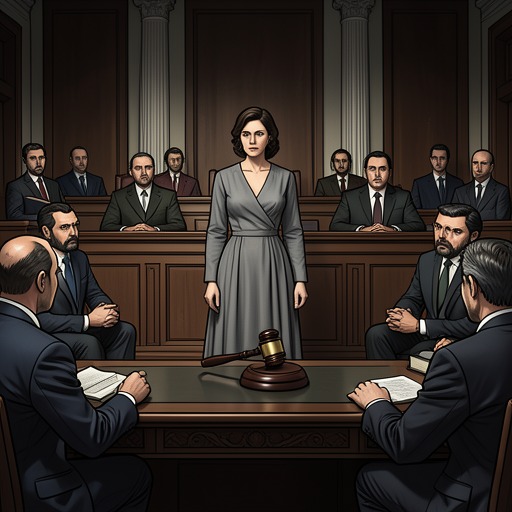
[Kya](entity:character-recall-character-kya-4aa1081e0d89)’s first-degree murder trial opened in [Barkley County](entity:location-recall-location-barkley-county-e23e5663530b) before a crowded, prejudiced audience. Judge [Harold Sims](entity:character-recall-character-harold-sims-33dd859cf8f9) refused to move the trial, and Kya sat handcuffed beside [Tom Milton](entity:character-recall-character-tom-milton-c53fbb623616) as the state made clear that it would seek the death penalty if she were convicted.
Early 1970 trial
Rodney Testifies About the Assault
Rodney Horn described seeing [Kya](entity:character-recall-character-kya-4aa1081e0d89) kick Chase at [Cypress Cove](entity:location-recall-location-cypress-cove-2ba10523d412) and hearing her shout that she would kill him if he bothered her again. Tom drew out that Rodney had first heard a woman yelling as if she were in danger, leaving open the possibility that Kya had been defending herself.
Early 1970 trial
The Coroner’s Evidence
The coroner testified that Chase fell backward through the open grate, but agreed that an accidental backward step could have produced the same injuries. He also confirmed that the fibers could have transferred years earlier and that nothing in his examination placed [Kya](entity:character-recall-character-kya-4aa1081e0d89) near Chase on the night he died.
Early 1970 trial
The Sheriff’s Case Unravels
Under cross-examination, Ed admitted that he had no proof anyone wiped away the footprints and that tides could erase tracks in the mud. He also acknowledged the tower’s grates had been known to remain open and that the investigation produced no fingerprints or hair connecting [Kya](entity:character-recall-character-kya-4aa1081e0d89) to the scene.
Early 1970 trial
The Necklace and Painted Journal
[Patti Love](entity:character-recall-character-patti-love-ec051e8aec1b) identified the shell necklace and [Kya](entity:character-recall-character-kya-4aa1081e0d89)’s painted journal, which depicted Kya giving Chase the necklace at the fire tower. Her testimony established their relationship and his habit of wearing the shell, but it did not prove who removed it or what happened to it on the night of his death.
Early 1970 trial
The Nighttime Boat Sighting
Hal Miller testified that a boat resembling [Kya](entity:character-recall-character-kya-4aa1081e0d89)’s had traveled toward the tower around the time Chase died. Tom emphasized the darkness, distance, and uncertainty of identification; [Tim O’Neal](entity:character-recall-character-tim-o-neal-c0b7578bdd9b) confirmed that many local boats shared the same shape and said he could not identify Kya as the operator.
Early 1970 trial
The Alibi Is Challenged
Bus witnesses confirmed that [Kya](entity:character-recall-character-kya-4aa1081e0d89) had traveled to [Greenville](entity:location-recall-location-560d32ae7aaa) and returned in daylight, while a driver suggested that a thin passenger might have been Kya disguised as a man. [Robert Foster](entity:character-recall-character-robert-foster-5b330e5c09f5) testified that he had taken her back to her motel after dinner, but the prosecution argued that she could have slipped out later.
Early 1970 trial
The Defense Tests the Timeline
Tom argued that the round trip from [Kya](entity:character-recall-character-kya-4aa1081e0d89)’s motel to [Barkley Cove](entity:location-recall-location-barkley-cove-9d21a90886e7), the tower, and back could not fit between the buses. [Tim O’Neal](entity:character-recall-character-tim-o-neal-c0b7578bdd9b) further testified that the boat seen that night could have belonged to any number of local people, leaving the prosecution with suspicion rather than a certain identification.
1970
The Jury Acquits Kya
After deliberating and reviewing testimony, the jury found [Kya](entity:character-recall-character-kya-4aa1081e0d89) not guilty. Judge Sims apologized for her months in jail, while the verdict left the village unsettled and the truth of Chase’s death officially unresolved.
1970, after the acquittal
Kya Returns to Her Home
[Jodie](entity:character-recall-character-jodie-1ce458d6c1b4) drove [Kya](entity:character-recall-character-kya-4aa1081e0d89) back to the shack, where she ran to the house and then to the beach to see the gulls. She resisted Jodie’s offer to stay, insisting that she needed to recover alone, but his care and the familiar marsh began to draw her out of the numbness of jail.
1968–1970, remembered after the acquittal
Jodie Gives Kya a Family
Before leaving again, [Jodie](entity:character-recall-character-jodie-1ce458d6c1b4) had given [Kya](entity:character-recall-character-kya-4aa1081e0d89) his address and promised to stay in touch, a simple assurance that meant more than any grand gesture. His return had restored the possibility of family, even though Kya still needed time before she could accept comfort without fearing another departure.
1970, shortly after the trial
Scupper’s Death Brings Tate Back
As [Kya](entity:character-recall-character-kya-4aa1081e0d89) began returning to the marsh, [Tate](entity:character-recall-character-tate-e4fe51a5c8b8) was taken from his work by the sheriff, who had come to tell him that [Scupper](entity:character-recall-character-scupper-6ad0c3681d57) had died. Tate went to his family’s graves, grieving the father he had neglected while consumed by his feelings for Kya.
1970, after Scupper’s funeral
The Night Heron Feather
[Tate](entity:character-recall-character-tate-e4fe51a5c8b8) found a night-heron feather on his boat and understood it as a message from [Kya](entity:character-recall-character-kya-4aa1081e0d89). He hurried to her lagoon, where she told him that she had always loved him; he promised never to leave again, and they finally embraced the relationship fear had kept them from sharing.
After 1970
Kya and Tate Build a Life
[Kya](entity:character-recall-character-kya-4aa1081e0d89) and [Tate](entity:character-recall-character-tate-e4fe51a5c8b8) lived together in the shack, explored the marsh, and worked among the specimens she had collected for years. They married in the way of the geese, built her a laboratory and studio, and continued her books rather than moving into the town life she had once hoped to enter.
During Kya and Tate’s later life
Jumpin’ Dies
[Jumpin’](entity:character-recall-character-jumpin-b821fbd3c84f) died in his sleep, bringing [Kya](entity:character-recall-character-kya-4aa1081e0d89) a different kind of grief from the abandonment she had known as a child. She visited [Mabel](entity:character-recall-character-mabel-a2367855b656) after the funeral and called Jumpin’ her father, recognizing the loyalty and care he had given her for decades.
During Kya and Tate’s later life
Kya Makes Peace with Ma
On the beach, [Kya](entity:character-recall-character-kya-4aa1081e0d89) imagined Julienne looking back and waving as she disappeared down the lane. She said goodbye without anger, accepting that her mother’s leaving had been shaped by illness and danger, even though it had left Kya alone for most of her childhood.
Later decades
The Marsh Changes Around Her
[Barkley Cove](entity:location-recall-location-barkley-cove-9d21a90886e7) grew into a tourist town, and the places [Kya](entity:character-recall-character-kya-4aa1081e0d89) had known filled with marinas, cafés, and shops displaying her books. The village’s stories about the [Marsh Girl](entity:expression-recall-expression-marsh-girl-89ee170f7eef) continued, but her work taught readers why the wetlands mattered and helped preserve the land she had made her home.
2009
Kya’s Final Day
At sixty-four, [Kya](entity:character-recall-character-kya-4aa1081e0d89) went out collecting and did not return. [Tate](entity:character-recall-character-tate-e4fe51a5c8b8) found her still in her boat, her heart having stopped quietly; he carried her home through the waterways that had shaped her life and arranged for her burial beneath an oak overlooking the sea.
Evening of Kya’s funeral in 2009
Tate Finds the Hidden Poems
Searching the shack for her papers, [Tate](entity:character-recall-character-tate-e4fe51a5c8b8) found a hidden compartment beneath the kitchen floor and discovered poems signed Amanda Hamilton in [Kya](entity:character-recall-character-kya-4aa1081e0d89)’s handwriting. Among them was [The Firefly](entity:expression-recall-expression-the-firefly-c2ccf67bd3d6), a poem that described a lure, a trap, and a man falling, turning her private writing into a revelation about Chase’s death.
Evening of Kya’s funeral in 2009
Tate Conceals the Truth
In the same hiding place, [Tate](entity:character-recall-character-tate-e4fe51a5c8b8) found the shell necklace that [Kya](entity:character-recall-character-kya-4aa1081e0d89) had taken from Chase. He burned the poems, removed the rawhide, and returned the shell to the shore, destroying the evidence rather than exposing Kya’s secret; the tide carried it away among countless other shells.